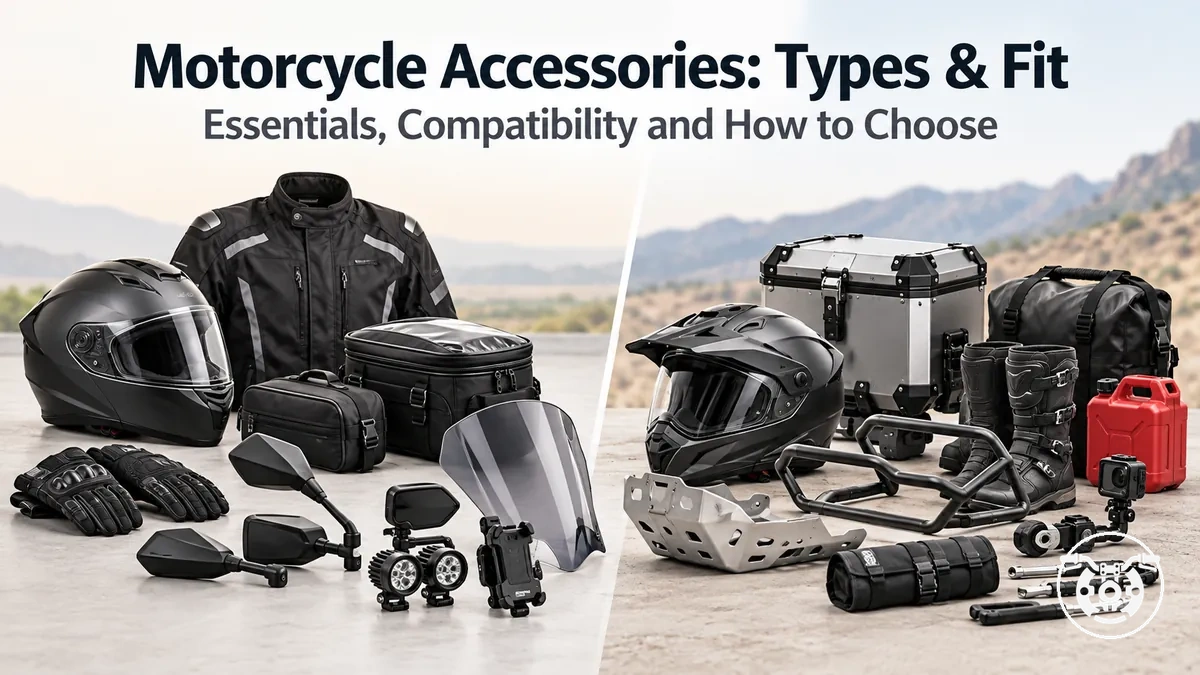
Motorcycle Accessories: Functions, Fit and Buying Priorities
Choose motorcycle accessories by the function you actually need, then confirm fit and compatibility with your exact motorcycle configuration before comparing quality, durability or price. An accessory is essential only when it addresses a recurring or necessary riding or ownership need; otherwise it may be useful, optional, or unsuitable.
Motorcycle accessory decision guide
Use this sequence to turn a broad accessory category into a fit-for-purpose choice. A product should pass the compatibility checks before quality, features or price become deciding factors.
- Define the needIdentify the function to solve: carrying, device access or charging, wind or comfort, visibility, protection or security, or maintenance support.
- Pass the fit gateVerify the mounting interface, dimensions and clearance, plus electrical or load requirements where they apply.
- Assign priorityRecurring or necessary need → essential; clear but occasional need → useful; little current need → optional.
- Compare eligible optionsOnly after fit is established, compare durability, expected exposure, maintenance burden, practical value and price.
Carry belongings
Luggage and storage
Check attachment points, capacity, clearance, load limits and weather exposure.
Mount or power a device
Electronics, mounts and power
Check mounting interface, device fit, control clearance, vibration exposure and electrical requirements.
Change wind exposure or ergonomics
Wind protection and comfort
Check accessory position, rider dimensions, motorcycle geometry, adjustability and secure mounting.
Be easier to notice
Lighting and visibility
Check placement and direction, electrical compatibility, environmental suitability and applicable local requirements.
Protect or secure the motorcycle
Protection and security
Check attachment or locking points, coverage or deterrence method, portability and motorcycle compatibility.
Support routine upkeep
Maintenance and workshop
Match the tool to the task and verify battery/charger compatibility or lifting interface and rated load where relevant.
Decision rule: if a required mounting, clearance, electrical, load or use condition does not match the motorcycle or task, treat the accessory as unsuitable even if the product otherwise looks attractive.
The sections below define what counts as a motorcycle accessory, organise accessory types by function, and apply the same need–fit–priority logic to specific riding and ownership situations.
Table of Contents
Motorcycle Accessories: Purpose and Scope
Motorcycle accessories are add-on items used to extend or support a motorcycle's function, convenience, protection, visibility, storage, maintenance or comfort.
An accessory serves a defined purpose in relation to the motorcycle or its use rather than simply adding another product to it.
Scope at a glance
- Primary role
- Add or support a function associated with the motorcycle or its use.
- Typical functions
- Storage, device mounting or power, wind protection, visibility, security, maintenance and comfort.
- When it matters
- The function becomes relevant when a riding or ownership condition creates that need.
- How to classify it
- Use the item’s main job and relationship to the motorcycle, not its brand or retail department.
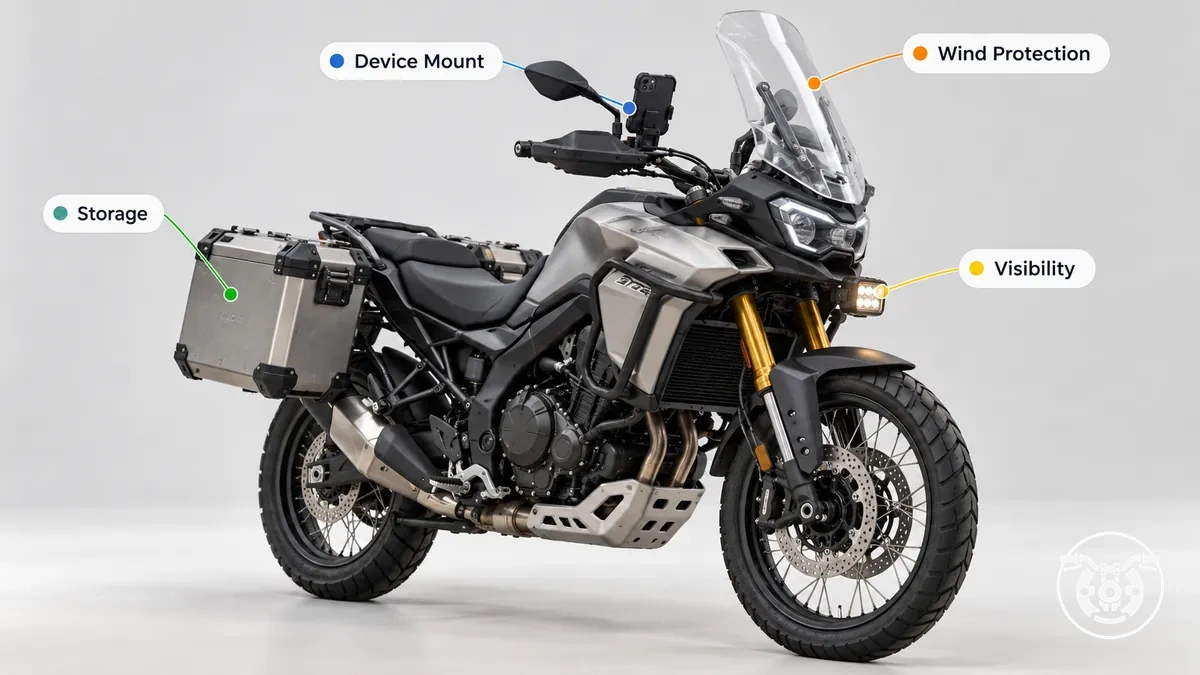
Installation requirements vary with the accessory and motorcycle configuration; a setup may require mounting, wiring, adjustment or another model-specific step.
Motorcycle Accessories vs Riding Gear and Replacement Parts
Motorcycle accessories primarily add or support a function on the motorcycle, riding gear is primarily worn by the rider, and replacement parts primarily restore an existing motorcycle component or its function.
For borderline items, classify the product by what it primarily relates to in actual use: the motorcycle, the rider or the component being replaced.
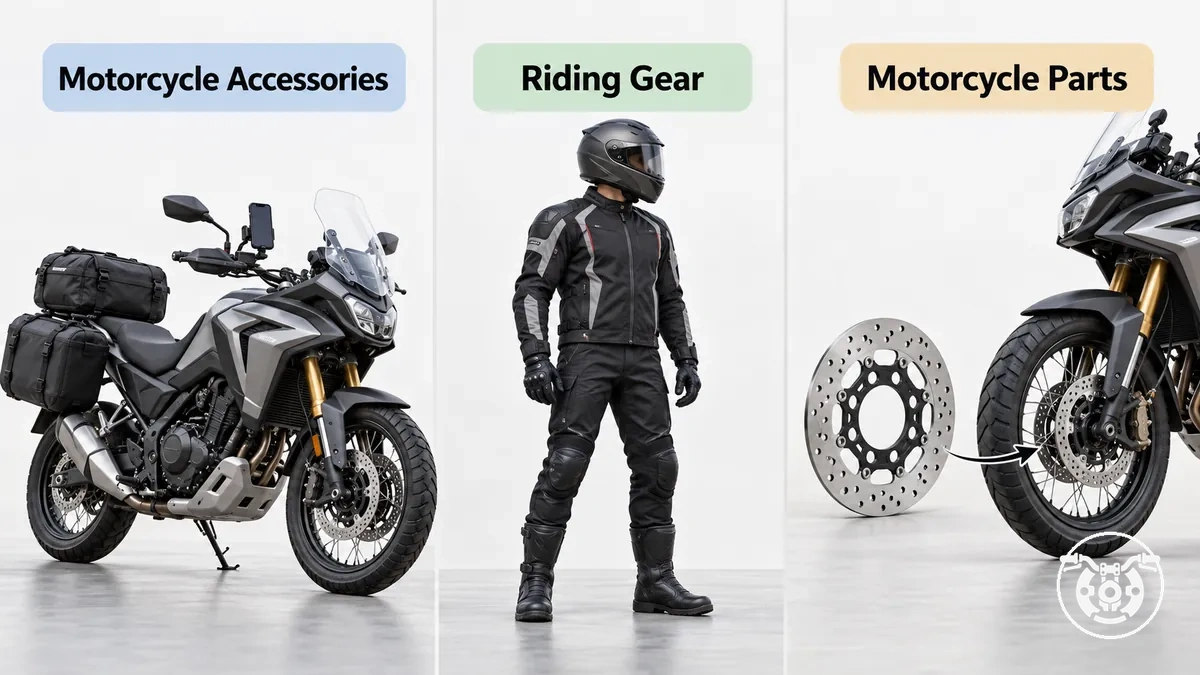
The comparison below separates the three classes by primary subject, purpose and relationship to the motorcycle.
| Class | Primary subject | Primary purpose | Relationship to motorcycle |
|---|---|---|---|
| Motorcycle accessories | Motorcycle | Add function or support an additional use | Add-on or attachment associated with the motorcycle |
| Riding gear | Rider | Serve the rider when worn, including protective or practical roles | Worn by rider rather than functioning primarily as a motorcycle attachment |
| Replacement parts | Motorcycle component | Restore component function by replacing a component | Substitutes for a component that performs an existing motorcycle function |
Borderline cases are classified by the role the item performs in its actual use rather than by its product name or retail category alone.
When one item can serve more than one role, the primary relationship in that use determines the class; this keeps motorcycle accessories focused on add-on functions without expanding into riding-gear selection or motorcycle repair.
Motorcycle Accessory Categories by Function
Motorcycle accessory categories are most useful when they are organised by the main function the accessory adds or supports for the motorcycle, riding need or ownership task.
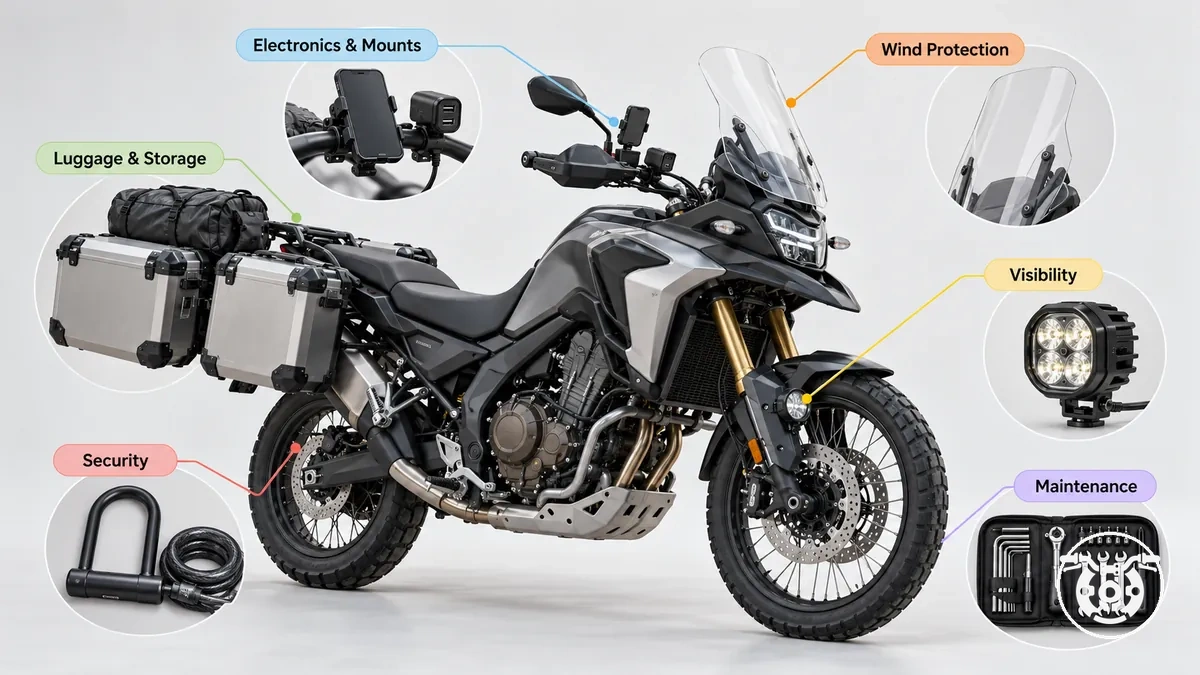
A multi-purpose item belongs to the category that reflects its primary intended use; secondary functions qualify the item but do not need a separate category. The illustration groups the major functions around the shared motorcycle context before the more specific groups below.
Electronics, Phone Mounts and Power Accessories
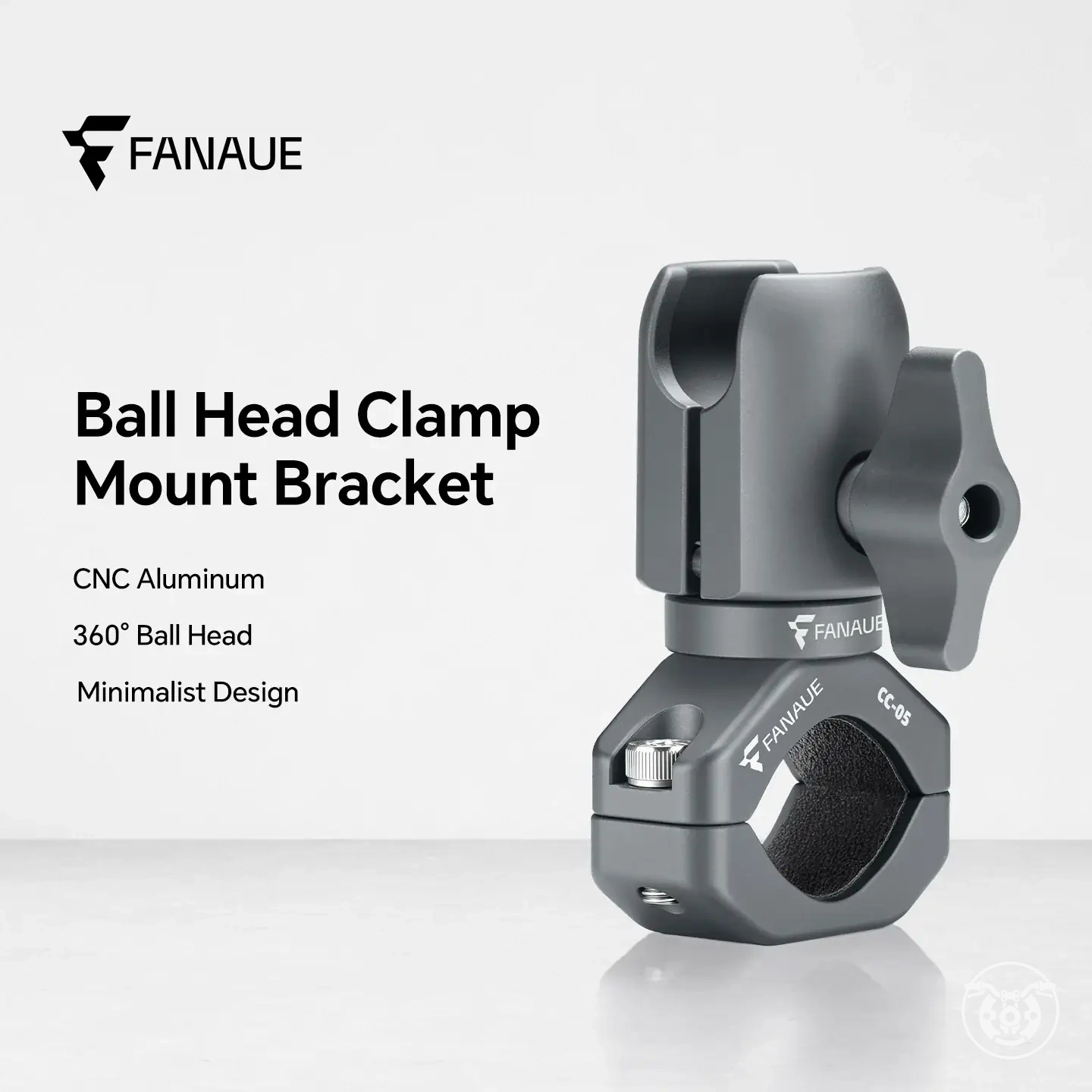
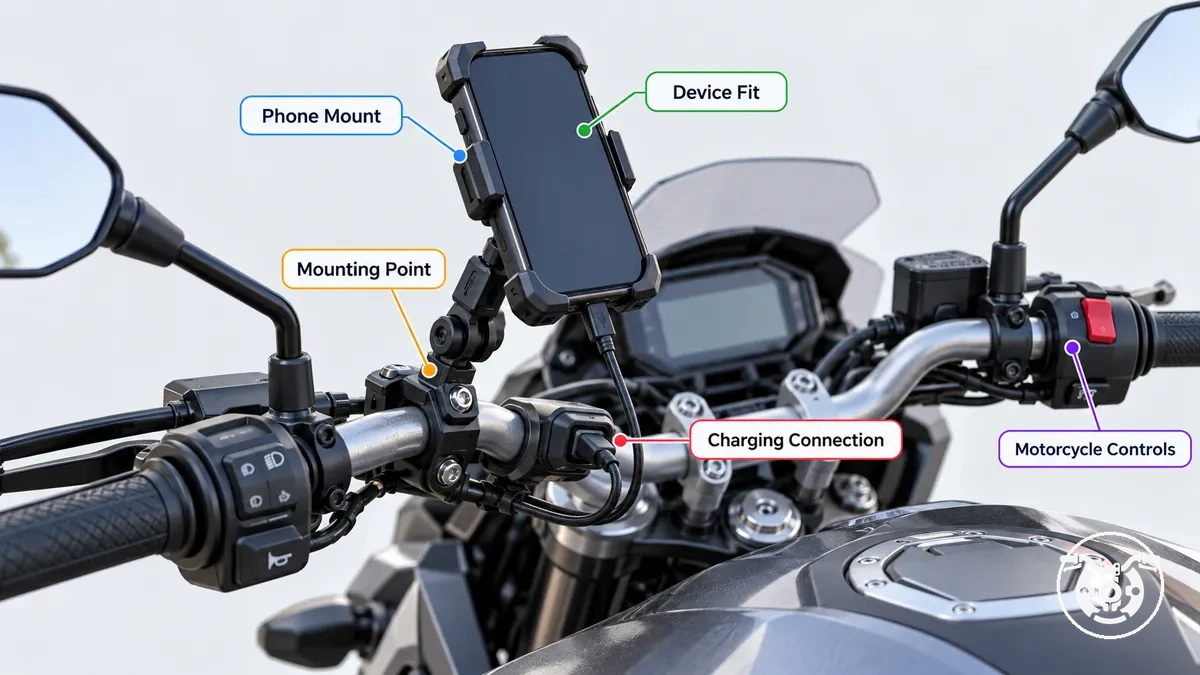
Electronics, phone mounts and power accessories support navigation, device access, communication and charging on a motorcycle. A phone mount provides a usable device position, while a power accessory provides a charging connection when the motorcycle, accessory and device support the required connection method.
Check compatibility before use
- Mounting interface: the mount must match an available motorcycle mounting point and remain stable in intended use.
- Device fit: the holder must suit the intended device dimensions and retain it securely.
- Control clearance: the installed position must not obstruct steering, controls or essential instruments.
- Exposure: the mount and device setup should suit the vibration and weather conditions expected during riding.
- Power connection: a charging accessory’s connector and electrical requirements must match the motorcycle connection and device being powered.
The illustration shows the relationship between a cockpit-area phone mount, device position and a nearby charging connection.
Luggage and Storage Accessories
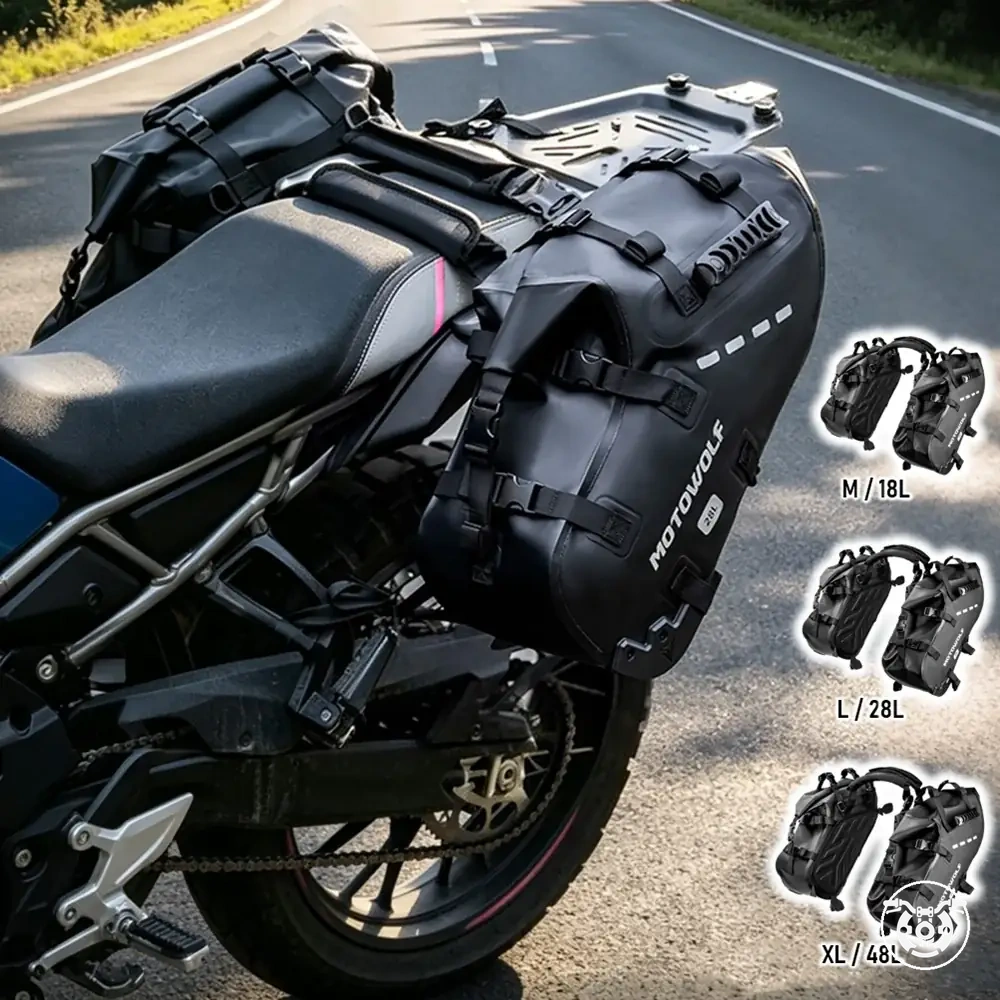
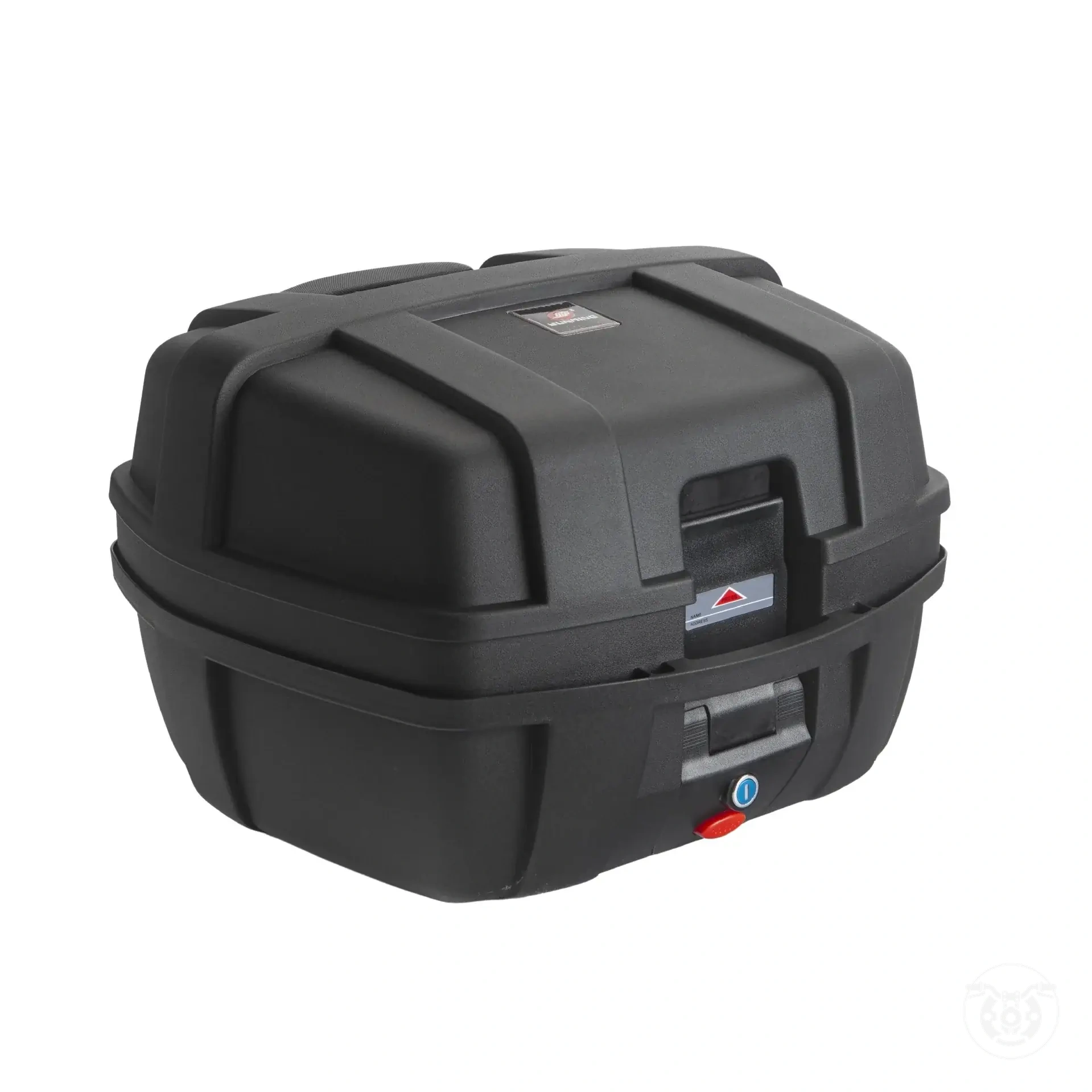
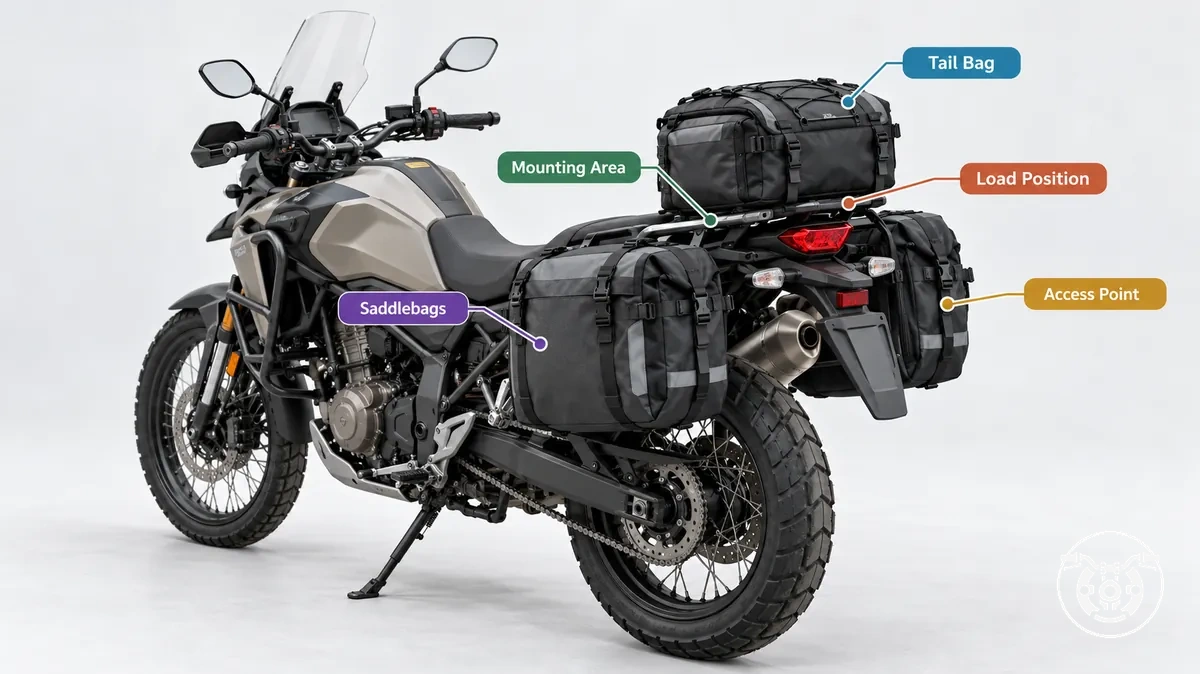
Luggage and storage accessories add carrying capacity through forms such as tail bags or saddlebags, but the required capacity depends on what must be carried and how the motorcycle is used.
Before choosing motorcycle luggage
- Capacity
- Match the volume to the carrying need; there is no single suitable capacity for every rider or luggage type.
- Attachment
- Use the intended attachment points and secure the load so the luggage remains stable during use.
- Clearance
- Keep luggage clear of tyres or wheels, exhausts, controls and moving parts, with the required room for suspension movement.
- Load limits
- Stay within the stated limits for the luggage, mounting system and motorcycle; load position also affects weight distribution.
- Weather and access
- Match weather resistance and opening or access needs to the conditions in which the luggage will be used.
The useful storage setup is configuration-specific: capacity, attachment, load placement and limits must be checked for the particular motorcycle rather than copied from another setup.
Wind Protection and Comfort Accessories
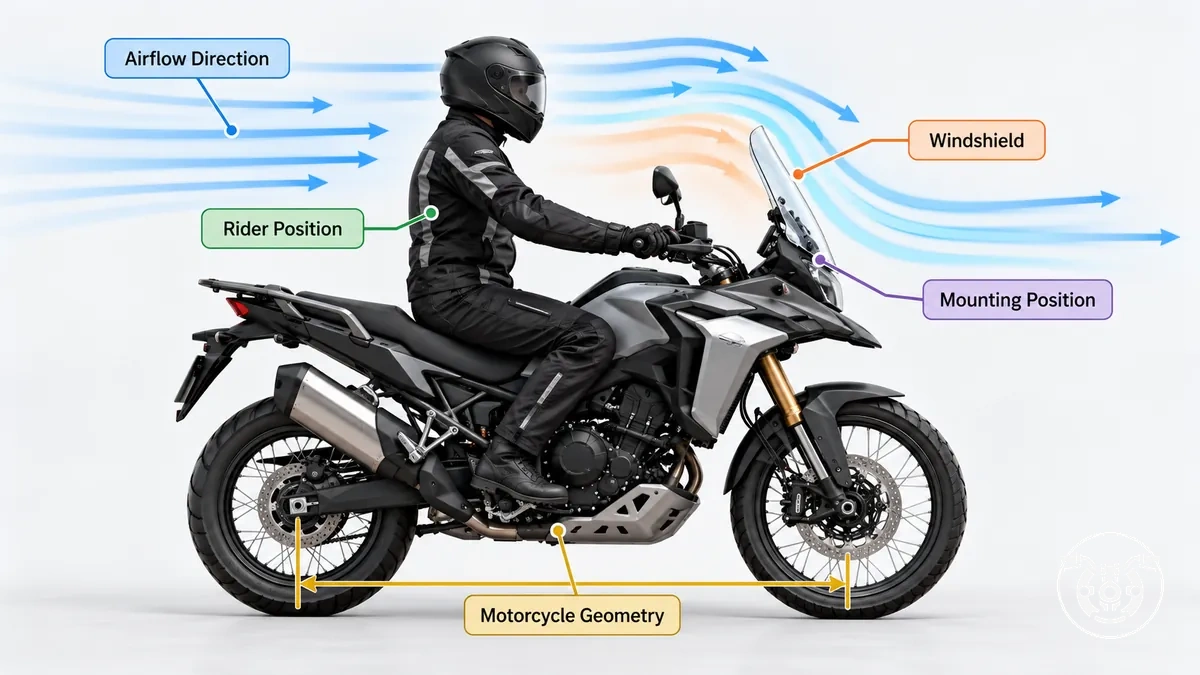
Wind protection and comfort accessories alter a rider’s exposure to airflow or the ergonomics of the riding position. A windshield changes how incoming airflow meets the rider, while other comfort accessories can change contact points or rider position.
What changes the result
- Accessory position
- Windshield height, angle or other supported settings change where airflow is redirected.
- Rider dimensions and posture
- Rider height and position change which part of the airflow reaches the body or helmet area.
- Motorcycle geometry
- Cockpit and bodywork geometry affect the baseline airflow and ergonomic relationship.
- Riding conditions and duration
- Speed, exposure and time in the riding position influence how noticeable a change feels.
- Mounting and adjustability
- The accessory must remain securely in its intended position, and adjustment is limited to the settings its design permits.
The same accessory can change airflow or ergonomics without producing the same comfort benefit for every rider or motorcycle.
The side-view illustration shows windshield position, rider posture and qualitative airflow direction as one combined configuration.
Lighting and Visibility Accessories
Lighting and visibility accessories are intended to make the motorcycle or rider presence easier to notice under relevant riding conditions, but brightness alone does not determine the visibility or safety outcome.
Check the complete visibility setup
- Placement and direction: position the accessory so its presentation matches the intended visibility function rather than relying on output alone.
- Electrical compatibility: when the accessory draws motorcycle power, its load, connector and connection requirements must suit the available electrical configuration.
- Environmental suitability: the accessory should be suitable for the weather and exposure conditions expected during use.
- Applicable requirements: permitted placement, brightness and use can vary by location and motorcycle configuration, so check the rules that apply to the specific setup.
Placement, riding conditions and motorcycle configuration all qualify the likely visibility effect; no accessory guarantees that another road user will notice the motorcycle.
Protection and Security Accessories
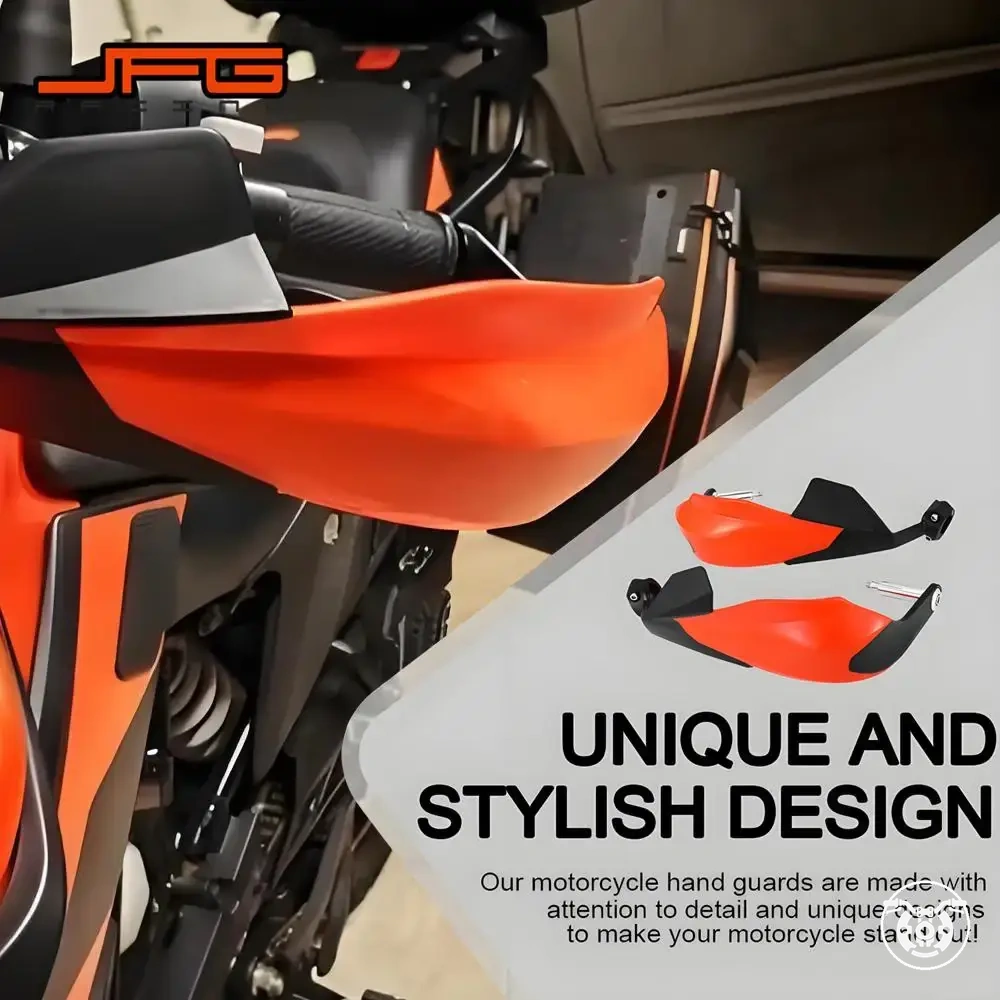
Protection accessories and security accessories serve related but different motorcycle functions: one is intended to reduce exposure to some forms of physical damage, while the other is intended to deter unauthorised use or theft-related risk.
Physical bike protection
Examples: frame sliders and other motorcycle-mounted protective components.
Fit criteria: attachment point, coverage area, construction and motorcycle compatibility.
Limit: protection can reduce exposure to some damage but does not guarantee a particular crash outcome.
Security and deterrence
Examples: locks and other securing devices.
Fit criteria: locking method, securing point, portability and how the device can be deployed when parked.
Limit: a security accessory can provide deterrence but does not guarantee theft prevention.
Both types remain motorcycle-focused accessories rather than rider protective gear, and their usefulness depends on the accessory, how it is used and whether its attachment or locking arrangement suits the motorcycle configuration.
Maintenance and Workshop Accessories
Maintenance and workshop accessories support routine ownership tasks such as cleaning, inspection, adjustment, battery charging or lifting; they are equipment for the task rather than maintenance instructions.
Match the accessory to the upkeep task
Frequency of use, storage space and maintenance burden determine whether keeping a workshop accessory is practical for a particular owner.
Essential, Useful and Optional Motorcycle Accessories
No single list of motorcycle accessories is universally essential because priority changes with riding needs, motorcycle configuration, ownership conditions and the problem an accessory is intended to solve.
Essential, useful and optional are context-dependent priority levels, not fixed product rankings. Fit can also exclude an otherwise relevant accessory when its mounting, connection, dimensions or other compatibility requirements do not match the motorcycle.
| Priority level | When it applies | Decision signals | Typical role |
|---|---|---|---|
| Essential | A recurring or necessary riding or ownership need requires the accessory's function. | Relevant function, frequent need, suitable fit, and compatible motorcycle configuration. | Addresses a condition that materially affects the intended riding or ownership task. |
| Useful | The function provides practical value under identifiable conditions but is not consistently required. | Relevant need, suitable fit, and occasional or situation-specific frequency of use. | Supports a riding or ownership task when the corresponding need occurs. |
| Optional | The accessory's function has little relevance to the rider's current conditions or is expected to be used infrequently. | Infrequent expected use, no current functional need, or limited relevance to the riding context. | Adds a function that can be omitted without leaving the identified riding or ownership need unresolved. |
How the same accessory can change priority
A commuter who regularly carries belongings may treat suitable storage as essential because the function recurs on normal trips.
An accessory used mainly for occasional touring can be useful without being essential for everyday riding.
If the function has little relevance to the rider’s current conditions, the accessory remains optional even when it is popular or inexpensive.
Value follows the accessory’s usefulness under the rider’s actual conditions rather than price alone. Before considering cost, compare the function being solved, expected frequency of use, fit, motorcycle compatibility and the consequence of not having that function.
Factors That Determine Whether a Motorcycle Accessory Is Suitable
A motorcycle accessory is suitable when its function, fit, compatibility, quality and use conditions align with the motorcycle configuration and intended riding or ownership need. Physical fit concerns the motorcycle or accessory interface, while electrical suitability applies when a powered connection is required.
No single attribute proves suitability on its own; function comes first, then the conditions required to install and use the accessory as intended.
Suitability checklist
- Intended function: the accessory should address a defined riding or ownership need; otherwise its suitability is limited regardless of other attributes.
- Mounting and interface fit: the mounting method and connection points should correspond to the motorcycle configuration so the accessory can be fitted as intended.
- Dimensions and clearance: where space is relevant, the accessory should fit within the available mounting area and required clearance for that configuration.
- Electrical requirement: a powered accessory should have connection and electrical requirements that correspond to the motorcycle and intended connection method.
- Compatibility: model, configuration, interface, and other applicable fit conditions should match the accessory's stated application before it is treated as suitable.
- Quality and durability: construction should be appropriate for the expected load, handling, frequency of use, and exposure conditions.
- Riding and environmental conditions: the accessory's intended use should correspond to the weather, vibration, route, or storage conditions it is expected to encounter.
- Maintenance burden: cleaning, inspection, charging, adjustment, or storage requirements should be practical for the owner's expected use.
Compatibility should be established for the particular motorcycle configuration. When a manufacturer specifies model, interface, dimension, electrical, load or other fit conditions, those conditions define the check rather than a universal value.
Durability should be judged against expected exposure—such as weather, vibration, load and repeated handling—rather than as an isolated quality label. Higher perceived quality does not compensate for unsuitable fit or compatibility.
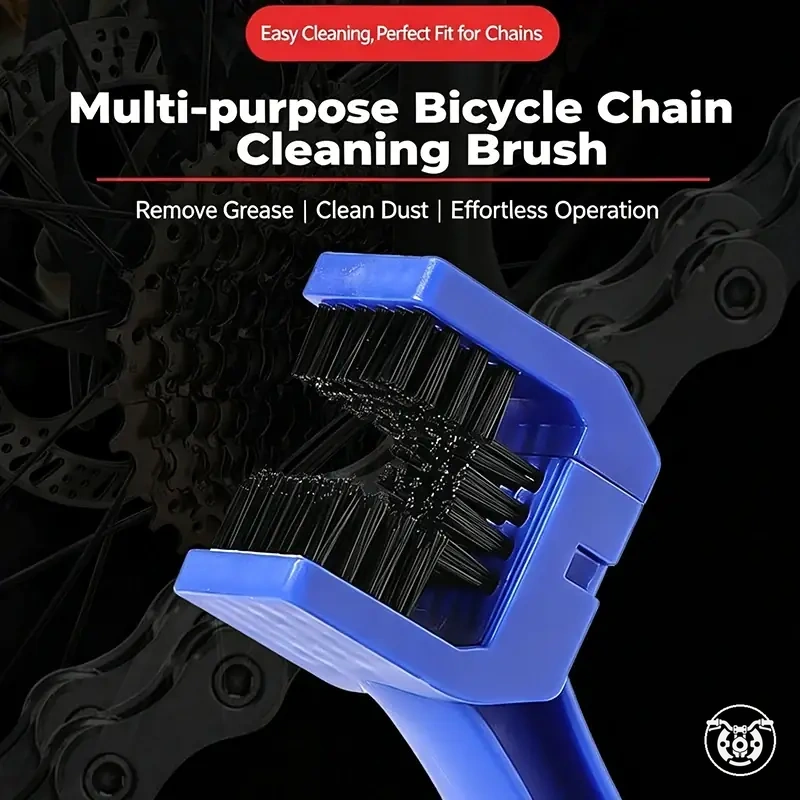
These product examples illustrate different accessory types rather than universal fits. Before following a listing, verify the relevant mounting, dimensions, electrical, load and use requirements for your motorcycle and intended task.